About Direct Gas Fired Ovens
Product details
| Power Source | Gas |
| Timing Device | With Timing Device |
| Usage | Metal industry |
| Frequency | 60 Hz |
| Automation Grade | Automatic |
| Voltage | 380 V |
| Capacity | >3000 kg |
| Air-Flow Direction | Vertical Down Airflow |
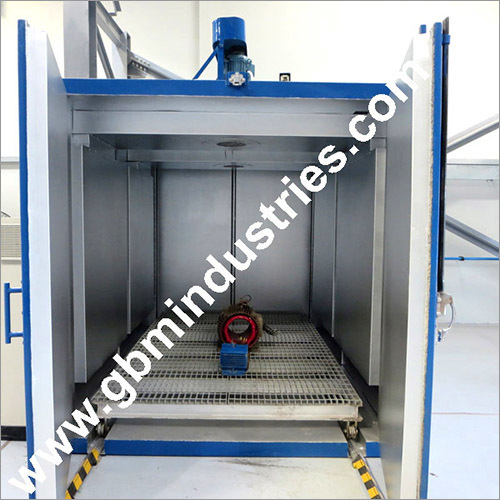
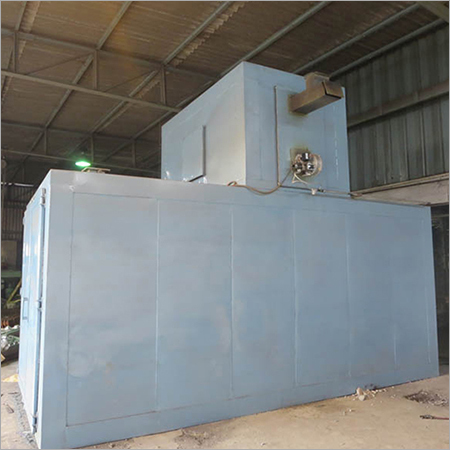
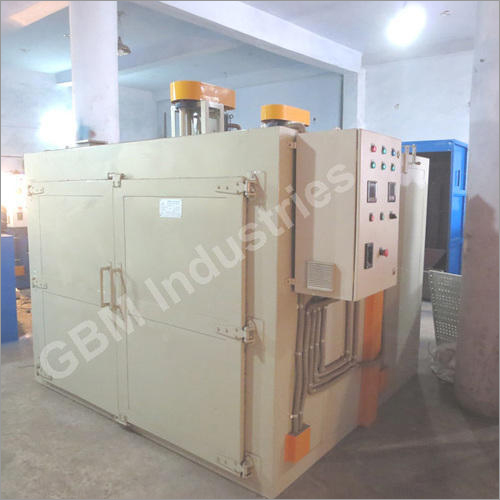
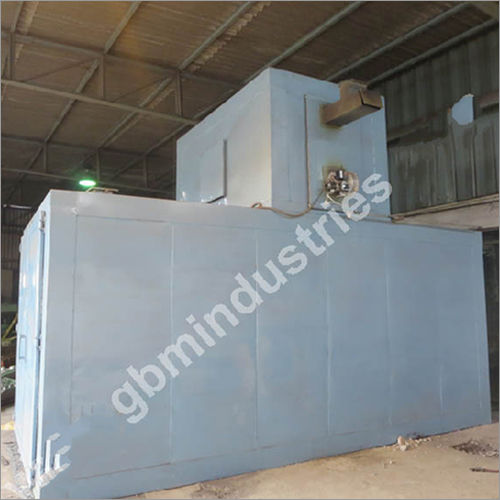
Optimal Performance for Metallurgical NeedsDirect Gas Fired Ovens offer an exceptional solution for the metal industry's heat treatment requirements. Their gas-powered design and robust construction provide even temperature distribution, essential for processes such as annealing and hardening. Designed for industrial reliability, their operation optimizes energy use while minimizing maintenance efforts.
Versatile Applications Across Metal ProcessingThese ovens support various metallurgical applications, including stress relieving, tempering, and preheating metal components. Their blue finish not only provides a professional appearance but also signifies quality engineering. The wide voltage compatibility and efficient gas usage make them suitable for factories with demanding production cycles.
FAQ's of Direct Gas Fired Ovens:
Q: How does a Direct Gas Fired Oven benefit metal industry operations?
A: A Direct Gas Fired Oven ensures rapid and uniform heating, which enhances productivity, improves metallurgical results, and lowers operational costs by using gas efficiently as the energy source.
Q: What processes can be performed using this type of gas oven?
A: These ovens are commonly used for annealing, tempering, preheating, and other heat treatment processes essential in metalworking and manufacturing.
Q: When is it recommended to use a direct gas fired oven instead of electric alternatives?
A: Direct gas fired ovens are particularly advantageous when high-volume, continuous heating is required, as they offer faster ramp-up times and lower fuel costs compared to electric models.
Q: Where are these ovens typically installed in the metal industry?
A: These ovens are generally installed in foundries, fabrication shops, and metal treatment facilities that require precise and reliable heat processing.
Q: What is the process for operating the oven and ensuring safety?
A: Operating the oven involves setting the desired temperature, loading the components, and initiating the controlled gas ignition. Safety features include flame failure detection and temperature regulation systems.
Q: How is the oven powered and what are its installation requirements?
A: The oven operates on a 380 Volt electrical supply and gas as the power source. Installation should be carried out by licensed professionals to ensure proper gas connections and electrical safety compliance.

 English
 Spanish
 French
 German
 Italian
 Chinese (Simplified)
 Japanese
 Korean
 Arabic
 Portuguese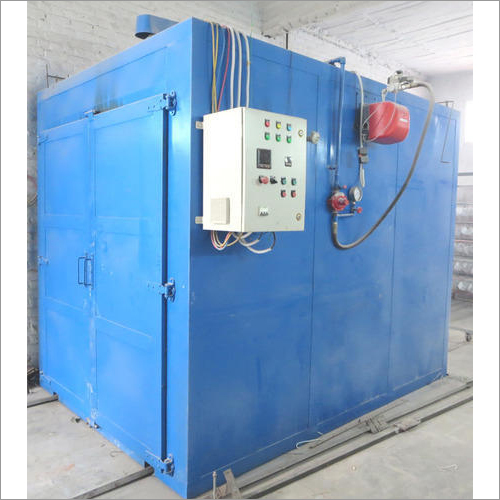

 Send Inquiry



 Send Inquiry
 Send Inquiry
 Send SMS
 Call Me Free
